- Seeds of Change Consulting Newsletter
- Posts
- Why We Need to Listen to Black Women | March 2026
Why We Need to Listen to Black Women | March 2026
A Women's History Month Reflection on Wisdom, Warning, and What Becomes Possible When We Pay Attention

LaShauna Austria
March 15, 2026
There is a particular kind of violence in being ignored. Not the violence of a raised fist, but the slower, quieter kind; the violence of a warning unheeded, a vote discounted, a body left in pain, a vision dismissed before it could take root. This is the violence Black women in America have known not as an exception, but as a chronic condition. And its consequences have never been theirs alone to bear.
When we fail to listen to Black women - their warnings, their wisdom, their survival knowledge, their leadership - we do not simply wrong them. We make ourselves worse. We weaken our own immune system as a society. The cost of not listening is written into our maternal mortality statistics, our political failures, our broken institutions, and our collective moral confusion. It is a cost we have been paying for centuries. We are still paying it now.
We are writing this in March, Women's History Month. That designation exists precisely because women's contributions to this country were so thoroughly erased from the historical record that a corrective intervention was required. But Women's History Month has its own blind spots. When the history being recovered centers primarily on white women's suffrage, white women's labor movements, white women's firsts - it repeats the same erasure it was designed to remedy. A Women's History Month that does not center Black women is not a complete accounting of women's history. It is another version of the same story: some women's voices matter more than others. We refuse that version. We are asking what it would mean to truly listen to Black women. Not as a gesture. As a practice.
Black women told us. They told us for years. The system chose not to hear them, and women died. This is not a failure of medicine alone. It is a failure of listening — rooted in centuries of medical racism that classified Black bodies as less sensitive to pain, less trustworthy in self-reporting, more suited to experimentation than to care. J. Marion Sims, considered the "father of modern gynecology," developed his surgical techniques by operating on enslaved Black women without anesthesia. The institution was built, from the beginning, on the premise that Black women's bodies did not need to be heard.
The legacy is not historical. It is present tense.

Black women voted against the architects of voter suppression. They voted for candidates who would expand healthcare, protect workers, and invest in communities gutted by disinvestment. They knocked on doors, organized precincts, turned out voters, and built coalitions when no one else showed up. They warned about the rise of authoritarianism, about the fragility of democratic norms, about the specific dangers posed by policies their communities had already lived through.
They were told they were being dramatic. They were told to fall in line. They were asked to wait. And when the consequences arrived, when voting rights eroded, when healthcare was stripped, when the courts shifted, when democracy itself began to buckle - - the people who had been warned the loudest acted shocked.


In organizations across every sector, Black women are disproportionately doing the labor of culture change, equity work, and emotional holding, while being disproportionately passed over for leadership, underpaid for their expertise, and discredited when they name what they see.
The phenomenon has a name: the Emotional Tax - the burden Black professionals, and particularly Black women, carry when they must constantly navigate spaces that were not built with them in mind, while simultaneously being asked to fix those spaces for everyone else. Research from Catalyst found that Black women face a unique double bind: they are expected to perform warmth and approachability while also navigating hyper-visibility, having their competence questioned, and being penalized for the same directness rewarded in their white counterparts.

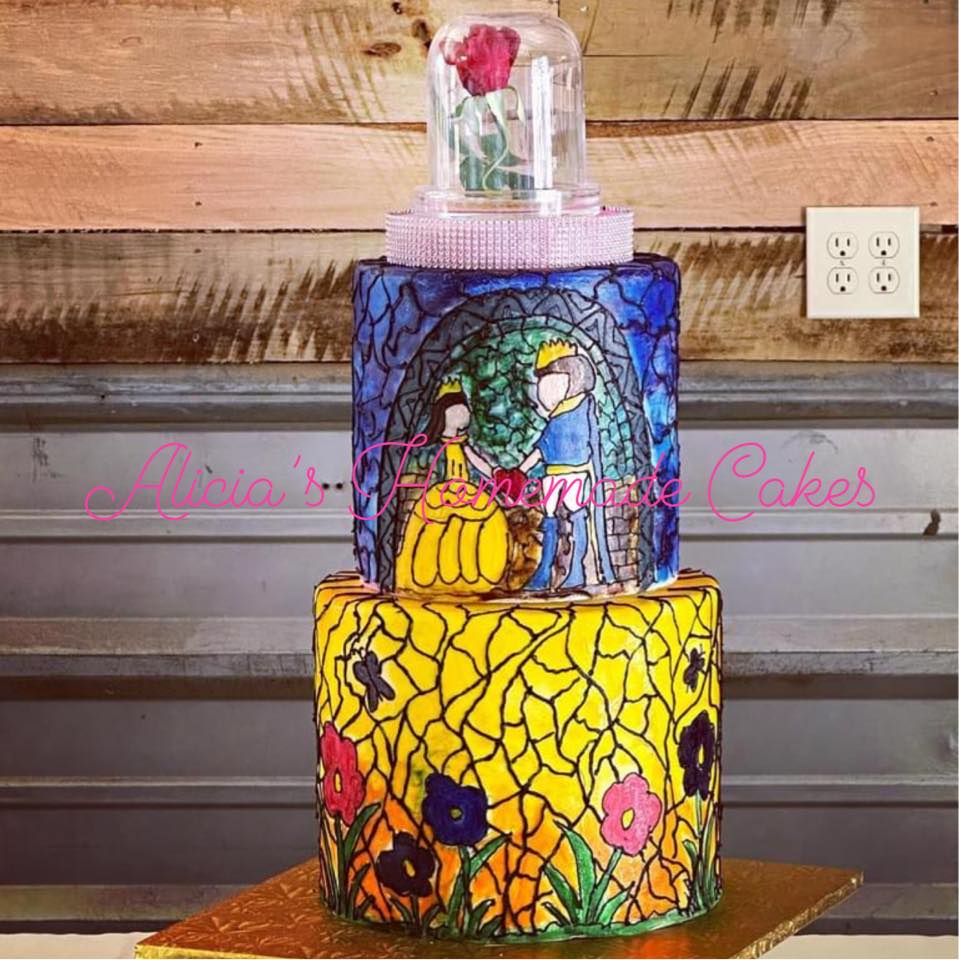



Seeds of Change Consulting invites you to ask yourself: In your organization, in your community, in your personal life, whose voice have you been most quick to discount? Whose history have you allowed to remain incomplete? And what might change in your institution, in your community, in yourself, if you stopped waiting for Black women's wisdom to be validated by others before you acted on it?
Rooted in liberation. Committed to change.
Seeds of Change Consulting, March 2026
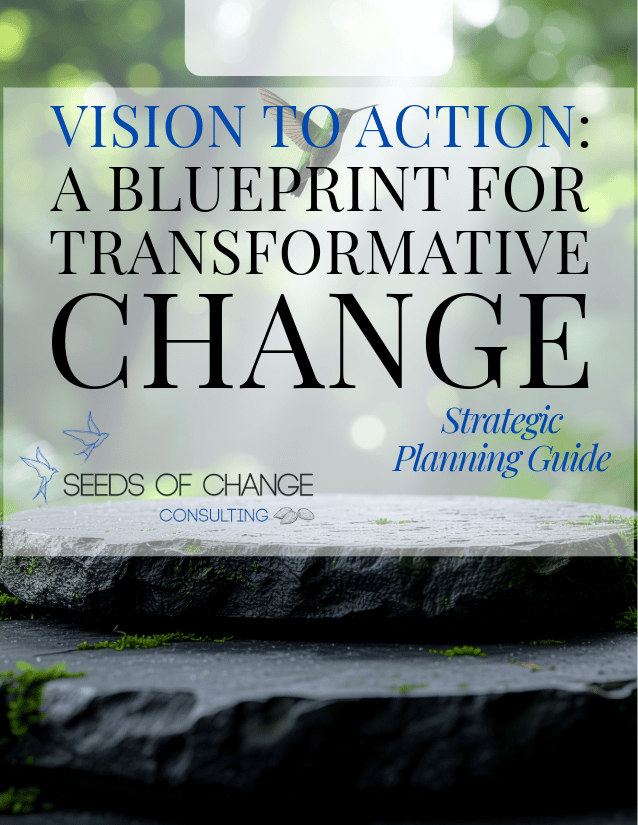 | What sets this guide apart is its refusal to treat strategic planning as a cold, corporate exercise. Unlike traditional toolkits that prioritize rigid growth metrics, the Vision to Action framework from Seeds of Change Consulting is built on the foundation of collective liberation and relational accountability. |


 | "In a racist society, it is not enough to be non-racist. We must be anti-racist."Angela Davis |
