- Seeds of Change Consulting Newsletter
- Posts
- Who Keeps What You Make
Who Keeps What You Make
Black August and Black Business Month

August holds two observances that rarely show up in the same sentence. Black August honors people who died fighting for Black liberation, most of them incarcerated when they were killed. National Black Business Month usually arrives as a list of restaurants to try.
That distance is why organizations tend to mark one and skip the other. Both exist because of the same arrangement, which is that Black labor in this country has been controlled by people who did not perform it. Incarceration is how that control was legalized after 1865. Business ownership is the exit that was then priced out of reach.
What Black August Was Built On
Black August started in California prisons in 1979, named for George Jackson, killed at San Quentin in 1971, for his brother Jonathan, killed the year before, and for Khatari Gaulden. Men inside committed to study, fasting from sunup to sundown, physical training, and organizing. They wore black armbands and stopped buying from the prison canteen.
Jackson entered prison at 19 for an alleged $70 taken from a gas station and never got out. Seven and a half of his eleven years inside were spent in solitary. During that time he taught the men around him that they were workers, that the state was profiting from their labor, and that they could strike. Administrators started encountering men who could argue their own disciplinary hearings and refuse to work the furniture shops for 3 cents an hour.
Black August is often described as a memorial. What the men who started it were arguing was narrower and more concrete. They were saying the prison was an employer, and that they were being robbed.

Why Black Business Month Exists
Set against that history, Black business ownership has a specific meaning. An owner sets the terms of their own work. Nobody assigns it, prices it, or takes the margin. For people whose labor had been claimed by an owner, then by a lessee, then by a county road board, that was the whole point.

The thing standing between a worker and an owner is capital. Frederick E. Jordan Sr. and John William Templeton founded National Black Business Month in 2004 for that reason. Jordan was an engineer who could not get financing for his San Francisco firm in 1969, and he was explicit that the month was aimed at lending policy rather than at consumer spending.
Twenty years on, the numbers hold. In 2024, 39% of Black-owned businesses were denied a loan, line of credit, or cash advance. For white-owned businesses the figure was 18%.
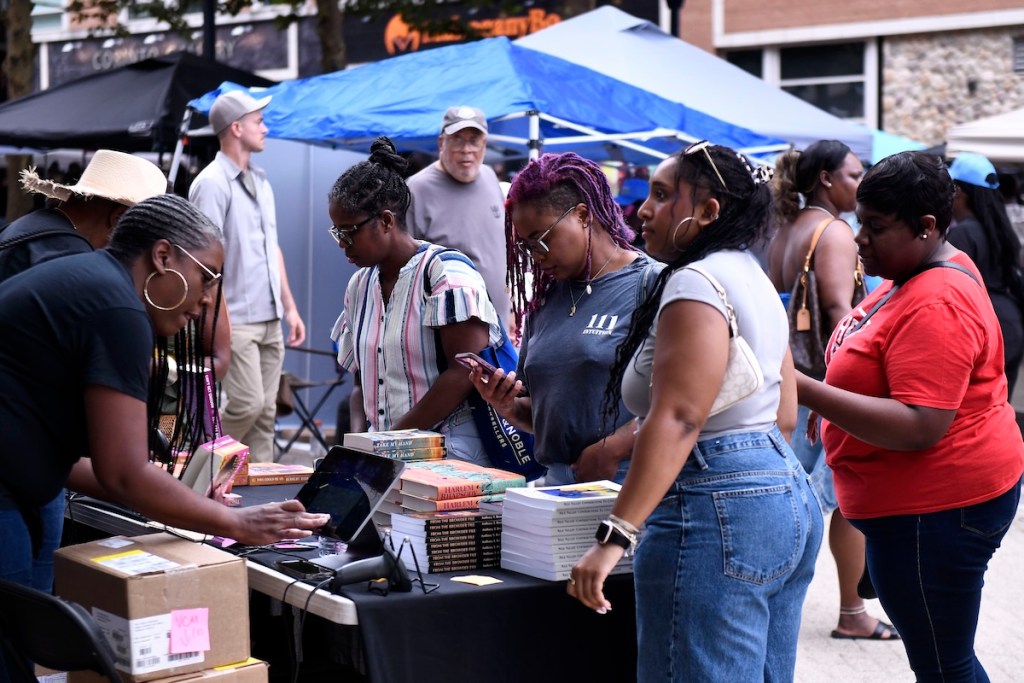
Credit scores carry the gap forward rather than explain it. Scoring models reward mortgage payment history, which the racial homeownership gap already limits. Researchers have found that if credit scores for Black-owned businesses were read the same way as scores for white men, those businesses' credit lines would double.
A denied loan does not read as coercion. Its effect is that a person keeps working for somebody else. Multiply that across a century and you get a population that supplies labor and rarely owns the thing the labor built.
What Happened on Parrish Street
While the state was working Black prisoners on the Western North Carolina Railroad and then the county roads, Black Durham was building the alternative. North Carolina Mutual Life Insurance was founded in 1898. Mechanics and Farmers Bank followed in 1907. Four blocks of Parrish Street became known as Black Wall Street, with the Hayti community just south of it holding the schools, churches, theaters, and doctors. Hayti was founded by freed people after emancipation, many of them from Stagville. W.E.B. Du Bois visited in 1912 and reported he had seen no equal to it anywhere in the country.
A bank matters here for a reason. Mechanics and Farmers made loans that white banks would not, which meant Black Durham could finance its own businesses and stop asking. The district was a working answer to the credit problem, built by people one generation out of slavery.
Urban renewal and the Durham Freeway went through it. The freeway alone destroyed at least 120 Black businesses and displaced as many as 500 families, and it cut Hayti off from downtown. The city said it would replace what was lost and did not.
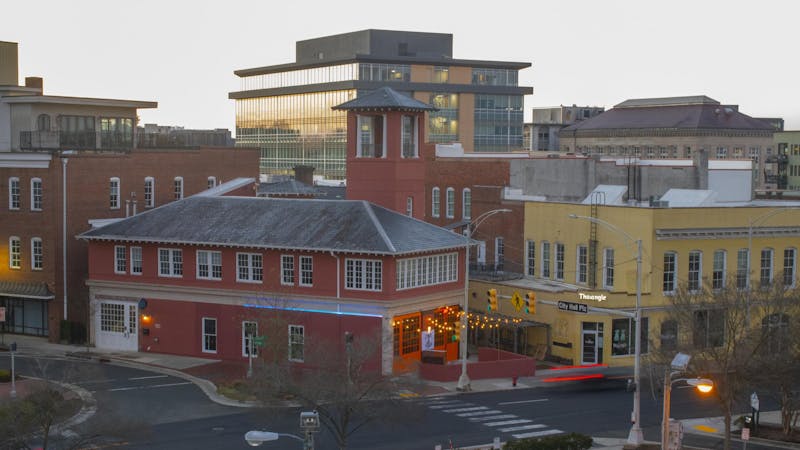


Seeds of Change Consulting provides organizations with the tools and expertise to identify and address systemic racism within their structures, policies, and practices.
Working with a leaner budget and ready to facilitate your own strategic visioning process? The Vision to Action Self Guide was made for you.


Alexander Jarrell is a Raleigh, NC-based photographer whose work spans sports, portraiture, and landscape. His range reflects a genuine curiosity about people and places, making him a versatile presence both on the sideline and behind the lens.



 | "In a racist society, it is not enough to be non-racist. We must be anti-racist."Angela Davis |
