- Seeds of Change Consulting Newsletter
- Posts
- What Silence Knows | April 2026
What Silence Knows | April 2026
On spring, strategic planning, and the racial equity work that grows from listening

LaShauna Austria
April 15, 2026

 | Spring is asking you something. This is your invitation to slow down long enough to hear it. It arrives in the stillness between winter and bloom, in the vibration of a forest that looks silent but is, in fact, fully alive. This poem names something our organizing culture often forgets: that the most important work happens not in the announcement, but in the quiet before it. Not in the launch, but in the listening that makes the launch possible. We are in middle spring now. The equinox has passed. The balance point, that moment when day and night hold equal weight, is already behind us. The light is lengthening. Something is about to flower. And the question before us, as a consulting team rooted in racial equity, is the same question every organization must sit with at the turn of a season: are we listening for what is already trying to emerge? |

Spring is not passive. Beneath the soil, the forest’s root system is redistributing nutrients to the plants that need them most. Birds are returning not because they were told to, but because they are following a deep pattern. Spring is strategic. It is also, by its very nature, a practice of attending to what is already moving.
That is what planning can do, when it is honest about what it does not know. Not the version that treats organizations like machines — input, output, KPI. The kind that begins by asking: What is already alive here? What has been reaching toward the light for years, unable to break through? What wisdom is waiting to be heard?
Spring does not impose its vision on the ground. It creates conditions, and then it trusts the seed. The planning processes we have seen work operate the same way — not dictating what an organization will become, but creating the conditions for what it is already capable of.
The equinox is worth sitting with too. For one day, light and dark hold equal weight. In racial equity work, that balance is still something we are reaching toward: What would it look like to build an organization where power doesn’t always flow back to the center? Where the people who have historically been at the edges are brought in not as consultants to the vision, but as its authors?


The forest was never actually silent. The vibration was there all along. It was not waiting to be created. It was waiting to be heard.
This is what racial equity work runs into, again and again. The wisdom of Black, Indigenous, and other communities of color was not absent from the room. It was present all along, but the conditions for it to be heard were not there. Institutions built on white frameworks for what counts as knowledge don’t create silence. They create selective deafness.
Planning processes that don’t disrupt this pattern will reproduce it: in the boardrooms community members can’t access, in the surveys designed without community input, in the “data-driven” decisions that count metrics but not lives. The plan that results is built on a foundation that cannot hold.
What would it mean to begin with listening? Not one community meeting, not the same email list, but starting from the honest position of not already knowing, and genuinely sharing who gets to shape the direction.
The starlight in this poem is deliberate. The wisdom held in Black and Indigenous communities, in communities of color who have survived and built across generations of structural exclusion, is like that starlight. Ancient. Already here. The question is not whether it exists. The question is whether we have done the work to look up.
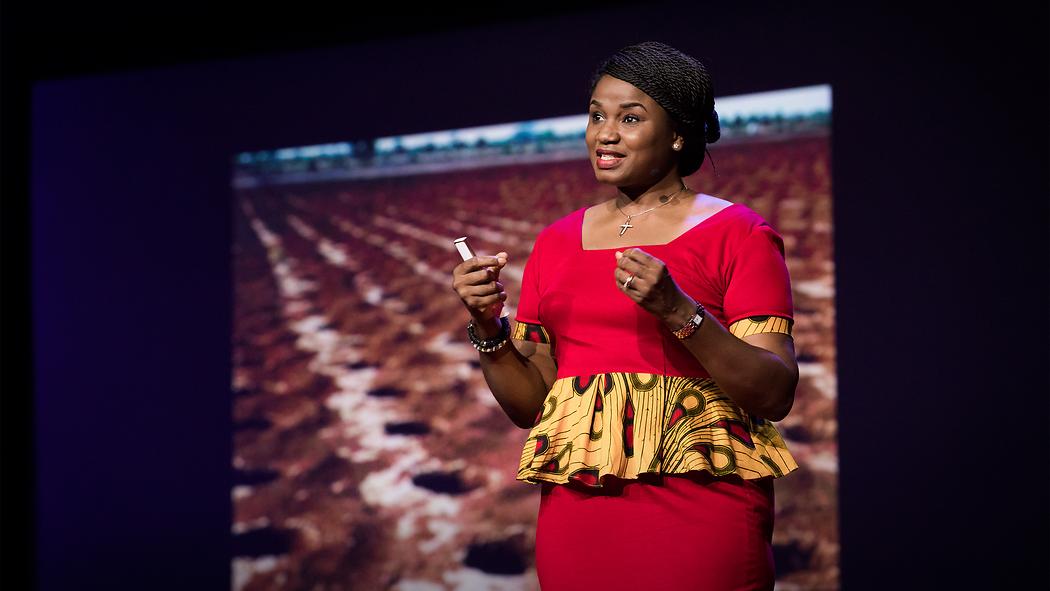

Every spring, organizations across our network are entering visioning processes, updating strategic plans, and reorienting around new realities. And every spring, we see the same split: some organizations plan from the center outward, and some plan from the root upward.
Planning from the center outward confirms what leadership already knows. It produces documents that feel familiar because they were built from familiar assumptions. Not without value, but it rarely surfaces anything new.
Planning from the root upward starts with the people closest to the work. Focus groups that center the people hardest to reach, not the most available. Leadership that grows from within. Resource decisions that ask who needs this most before who is easiest to serve.
At Seeds of Change, we don’t just offer a simple template. We build processes that make genuine co-creation possible because the plans that actually hold are the ones built in partnership with the people most affected by the work.
There is no equity-centered planning without accountability. And there is no accountability without the willingness to be wrong.
 | The @nikeuarea slide keeps circulating because it says what organizations rarely say out loud: that showing up in genuine community means you will cause harm - - not because you are a bad organization, but because harm is baked into the patterns we have all inherited, and those patterns don't disappear the moment you write "equity" into your mission statement. So build repair in before you need it. What accountability practices does your organization commit to in advance? Who gets to name the harm? Who does the repairing? The plans that last are the ones humble enough to leave room for the moment when the community you are serving says 'you missed us' and ishonest enough to know that moment will come. |
If your organization is in a planning season, or knows one is coming, Seeds of Change can help you build a process that starts from the root upward. We work with nonprofits, coalitions, and community-based organizations to design strategic planning processes that center the people closest to the work, build in genuine co-creation, and hold space for the listening that makes the plan possible.
Ready to build something that holds?
Working with a leaner budget and ready to facilitate your own process? The Vision to Action Self Guide was made for you.
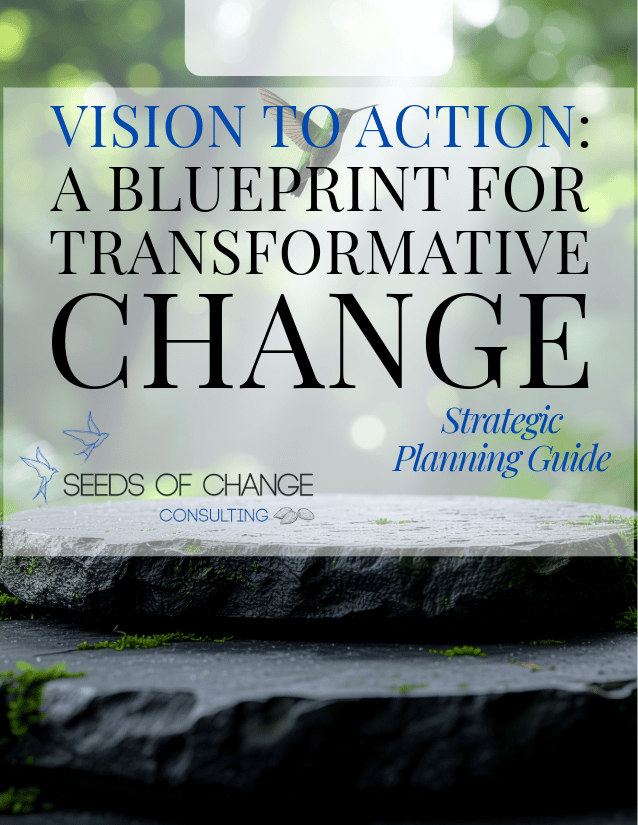 | What sets this guide apart is its refusal to treat strategic planning as a cold, corporate exercise. Unlike traditional toolkits that prioritize rigid growth metrics, the Vision to Action framework from Seeds of Change Consulting is built on the foundation of collective liberation and relational accountability. |





 | "In a racist society, it is not enough to be non-racist. We must be anti-racist."Angela Davis |
