- Seeds of Change Consulting Newsletter
- Posts
- The Exception
The Exception
Labor Day, the Thirteenth Amendment, and Who Gets Screened Out

Labor Day was last week. It exists because workers organized, struck, and in some cases died for the right to set the terms of their own work. Today is National Voter Registration Day and Constitution Day falls on Thursday. One clause in that Constitution explains why the three have never covered the same set of people.
How Incarceration Became a Labor System
The Thirteenth Amendment ended slavery with one exception written into the text. Involuntary servitude remains legal as punishment for a crime. Southern legislatures read that clause correctly and got to work producing convictions.
Black Codes criminalized ordinary behavior specific to Black life after emancipation. Vagrancy. Loitering. Failure to carry written proof of employment. Being arrested under these laws was the point. Once convicted, a person could be leased to a railroad, a mine, a lumber camp, or a plantation, and the money went to the state.
What made the system durable was that it paid. A conviction stopped costing a county money and started earning it.
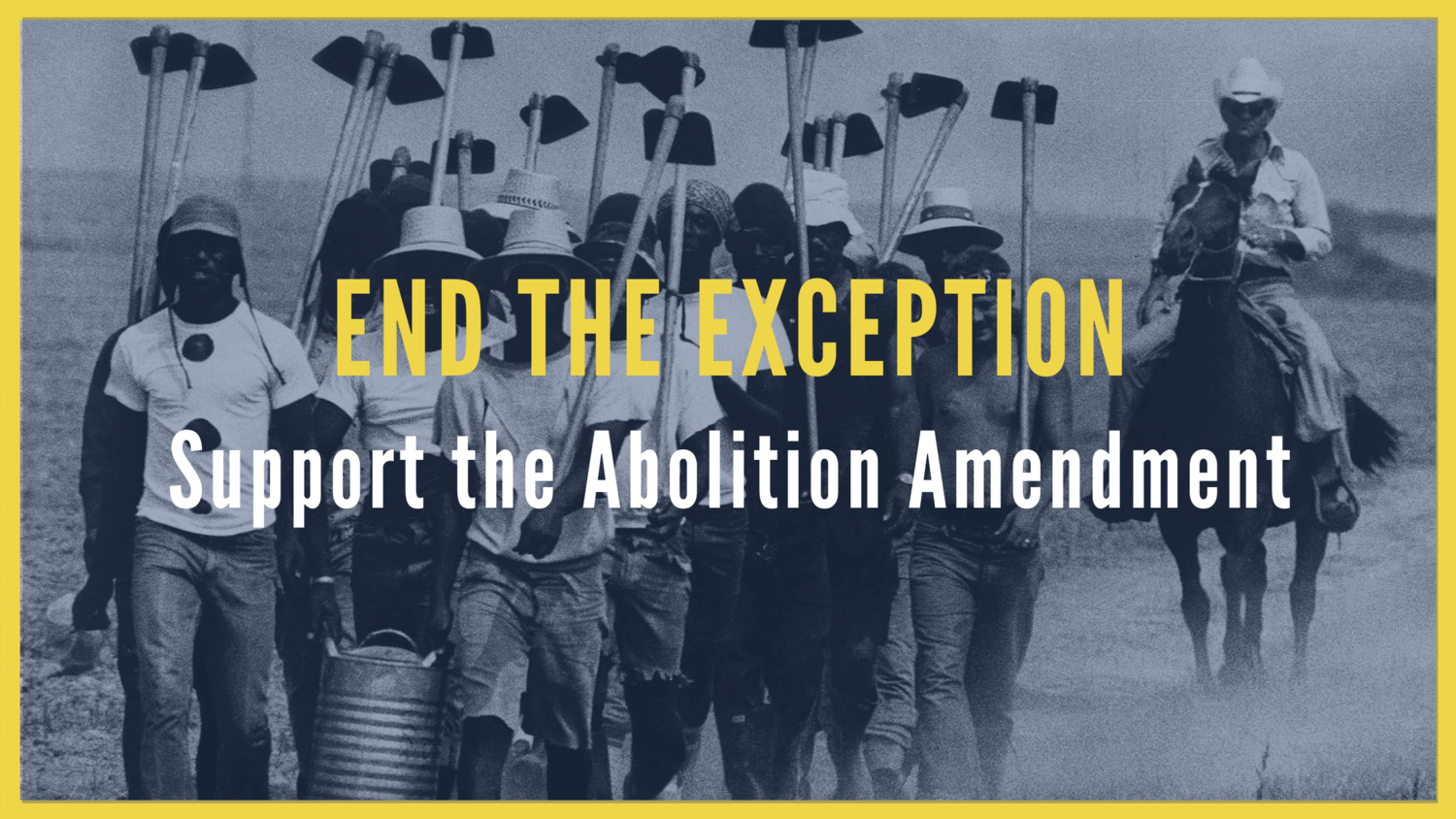
North Carolina Called Itself the Good Roads State
Prisoners built the roads. A 1900 report from the Industrial Commission on Prison Labor praised North Carolina's leadership in the practice. The state could build a mile of road for $800. It could guard, shelter, clothe, and feed a convict for 21 cents a day. Men lived for years in towed wooden boxes, more than twenty to a cage. By 1915 a state official put a third of the road budget in chain gang hands.
From 1933 to 1956 the prison system operated as a subsidiary of the State Highway and Public Works Commission, and the unpaid labor of imprisoned people brought in enough to fund most of that system's budget. Legislators separated the two agencies in 1957.
April 1968, Raleigh
At the noon whistle on April 16, 1968, roughly 500 men at Central Prison stayed in the yard. Sixty-six went back to work. The rest told the chief custodial officer they would not work, eat, sleep, or move until the Commissioner of Corrections and reporters from both Raleigh papers came to hear them.
They gave five demands, most about daily conditions: men out of solitary, a monthly grievance committee, hot meals year-round, televisions in two cell blocks. Third on the list was a system for compensating them for their labor. The General Assembly had authorized the Department of Correction to create one the year before, and it had not.
The standoff ran fourteen hours. Riot-control officers were called in and ordered to open fire, with guards shooting down from the walls. Six men were killed: William Matthews, Jerry Allen Walston, Donald Fox, Nathaniel Latta, John Marvin Scurlock, and Andrew Junior Branch. Commissioner Vernon Bounds told a Daily Tar Heel reporter seven years later that he would do precisely the same thing again.
North Carolina's Department of Natural and Cultural Resources titles its account of that day "Prelude to Attica." The state began paying incentive wages in 1975, at ten cents to a dollar a day.

Correction Enterprises, the state's prison industries division, employs more than 1,400 incarcerated people on 40-hour weeks. State law caps their pay at $5 a day and most earn between forty cents and $1.25. The division posted $10 million in net income for the fiscal year ending June 2024. North Carolina's minimum wage comes to $58 for the same eight-hour day.
Where This Shows Up at Work
State law requires every state agency, institution, and university to give Correction Enterprises products purchasing preference, exempt from competitive bidding. Counties, municipalities, and public schools buy from it too. The office chairs are upholstered at Alexander Correctional and the printing is done at Nash. A school district here can furnish its buildings, at a discount, with the labor of people earning forty cents a day.
Who Buys It
A two-year Associated Press investigation published in January 2024 traced goods produced by incarcerated workers into the supply chains of hundreds of familiar brands. Three companies were buying straight from prisons rather than through intermediaries.
Cargill. Acknowledged purchasing from prison farms in Tennessee, Arkansas, and Ohio. The company called the volume a small fraction of its total and said it was determining remedial action.
Tyson Foods. AP reporters in Alabama followed prisoner transport vans to Tyson poultry plants. Tyson owns Hillshire Farm, Jimmy Dean, and Sara Lee.
Archer Daniels Midland. Bought soy, corn, and wheat directly from prison farms. ADM pointed to existing policies restricting suppliers from using forced labor.
Downstream, the AP traced the same goods onto shelves at Kroger, Target, Aldi, Walmart, and Whole Foods, and into the supply chains of McDonald's and Burger King. Most companies contacted did not respond.
It also shapes who is in the room. Forty-five percent of American adults have had an immediate family member spend a night in jail or prison, 49 percent in the South, and Black Americans about 50 percent more often than white Americans. A session on prisons or hiring policy is about somebody's father or son. Build the design around that.


Seeds of Change Consulting provides organizations with the tools and expertise to identify and address systemic racism within their structures, policies, and practices.
Working with a leaner budget and ready to facilitate your own strategic visioning process? The Vision to Action Self Guide was made for you.



 | "In a racist society, it is not enough to be non-racist. We must be anti-racist."Angela Davis |
